


ARCHE
Welcome Note
I admit it: Arche is a bit of a pun. On the one hand, it means “First Principle” in Greek and was the name of my undergraduate philosophy journal. On the other hand, it can be read as a truncated “Arche-ology”, which is, of course, the goal of Prismatica. Arche, then, represents the first principle of Prismatica, which is social and cultural arch(a)eology. Arche also serves as an introduction to the greater literary pursuit, Encyclopedia Prismatica, which features far more detailed essays, stories, poems, and art pieces.
Arche is not without import though; among shorter articles and general updates, the weekly newsletter will also feature two recurring columns—Composer of the Week and Artist of the Week—and contributions from readers and contributors to ENPRI. This is a space which, while less academic and rigorous as the journal, is more social, communal, and investigative. Far less editorial work goes into articles published in Arche (though standards still exist), and there is no publication process or submission workflow. If you have something to contribute to the Prismatica community, simply send it via email and see it uploaded in the following newsletter. With rare exceptions, any piece can find its way into the digital walls of Arche.
Composer of the Week
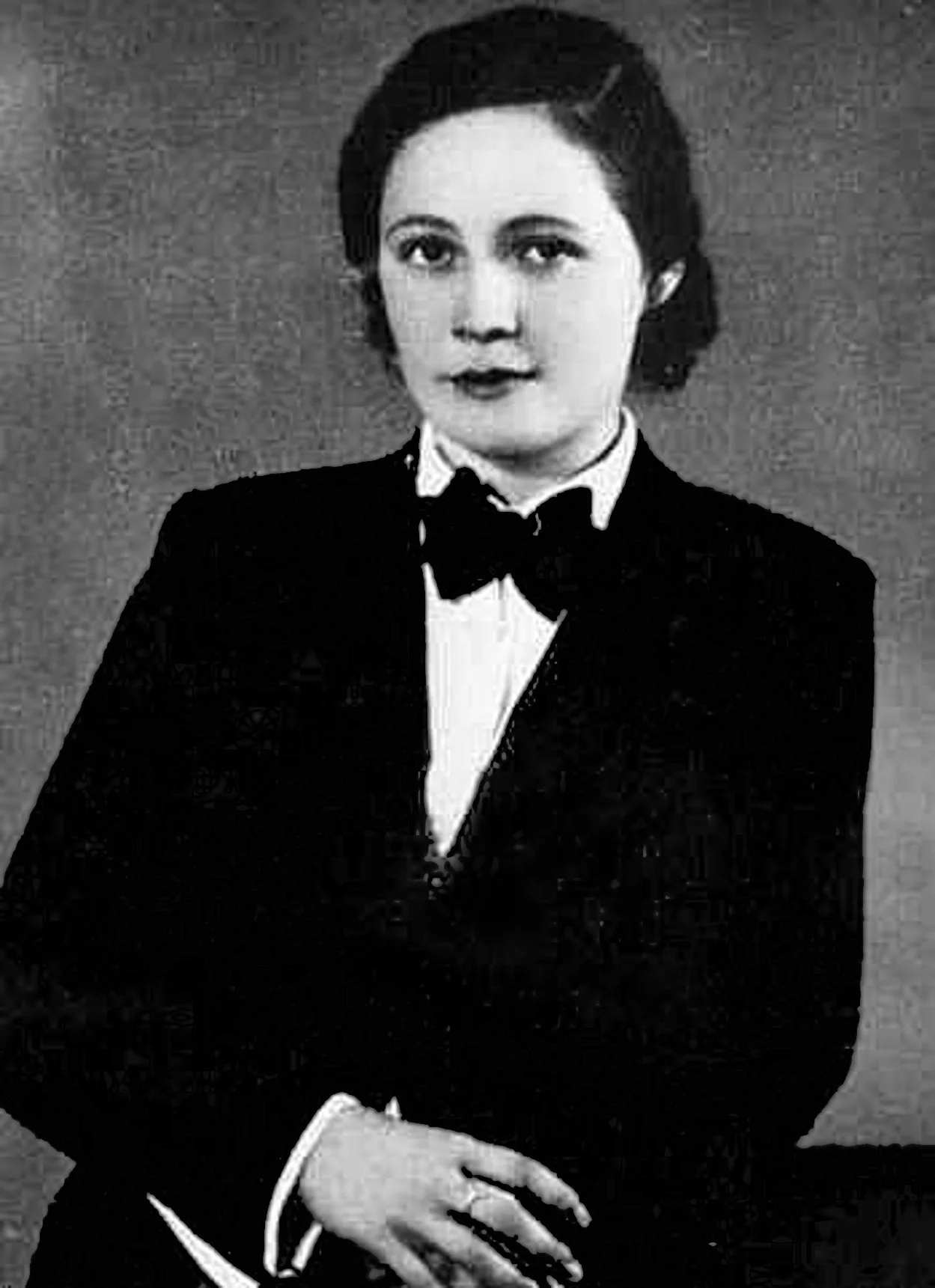
Vitezslava Kapralova
Trailblazer is often used to describe anyone who achieved a first, or someone who was seen by contemporaries as eccentric or unorthodox and who afterward became a new standard-bearer of their respective discipline. Jimi Hendrix is a trailblazer for rock music; Cezanne was a trailblazer for painting; Shirley Chisolm was a trailblazer in American politics.
This, however, is a narrow view of trailblazing–each of these persons, while undoubtedly trailblazers, was also revolutionary. They not only were the first in some specific lineage or act; they also revolutionized the field in which they thrived. But blazing a trail need not involve burning the entire forest and building something new–sometimes, a trailblazer is one who merely clears the debris of an existing path to remind us of what is possible. Da Vinci by no means cleared the entire forest of the renaissance–he did, however, define what it meant to exist within it. Flaubert did not reinvent the novel–he did show that the path had become covered in dense foliage and cleared it for a generation to follow.
In this lineage, I believe, resides the tragically under-known composer, Vitezslava Kapralova. Perhaps controversially, I believe birth and death dates to be unnecessary facts of a person’s life (special thanks to Heidegger for that insight)--what is important is what happens in between. Unfortunately, discussions on Vitezslava’s life are often pre-empted with her age at the time of her passing: 25. I willn’t deny this young age adds a certain mystique to her achievements; however, I believe that focusing on the shortness of her life minimizes her accomplishments, precisely by reconfiguring them in the context of her age. Were she to have lived for 50 more years, would critics regard her works as profound? Or, as I suspect, would critics be more apt to minimize her accomplishments in light of her contemporaries?
And yet, her accomplishments do merit praise, not because she accomplished them within only 25 years, but because she accomplished them at all. This is not to say that all estimations of her work are based solely on her age; the fact that she was included in France’s Portraits de France exhibition in 2021 and 2022 had more to do with her activity in France than her age, and I believe if she had lived longer than she did, she would still be included in that list. The question then becomes: why?
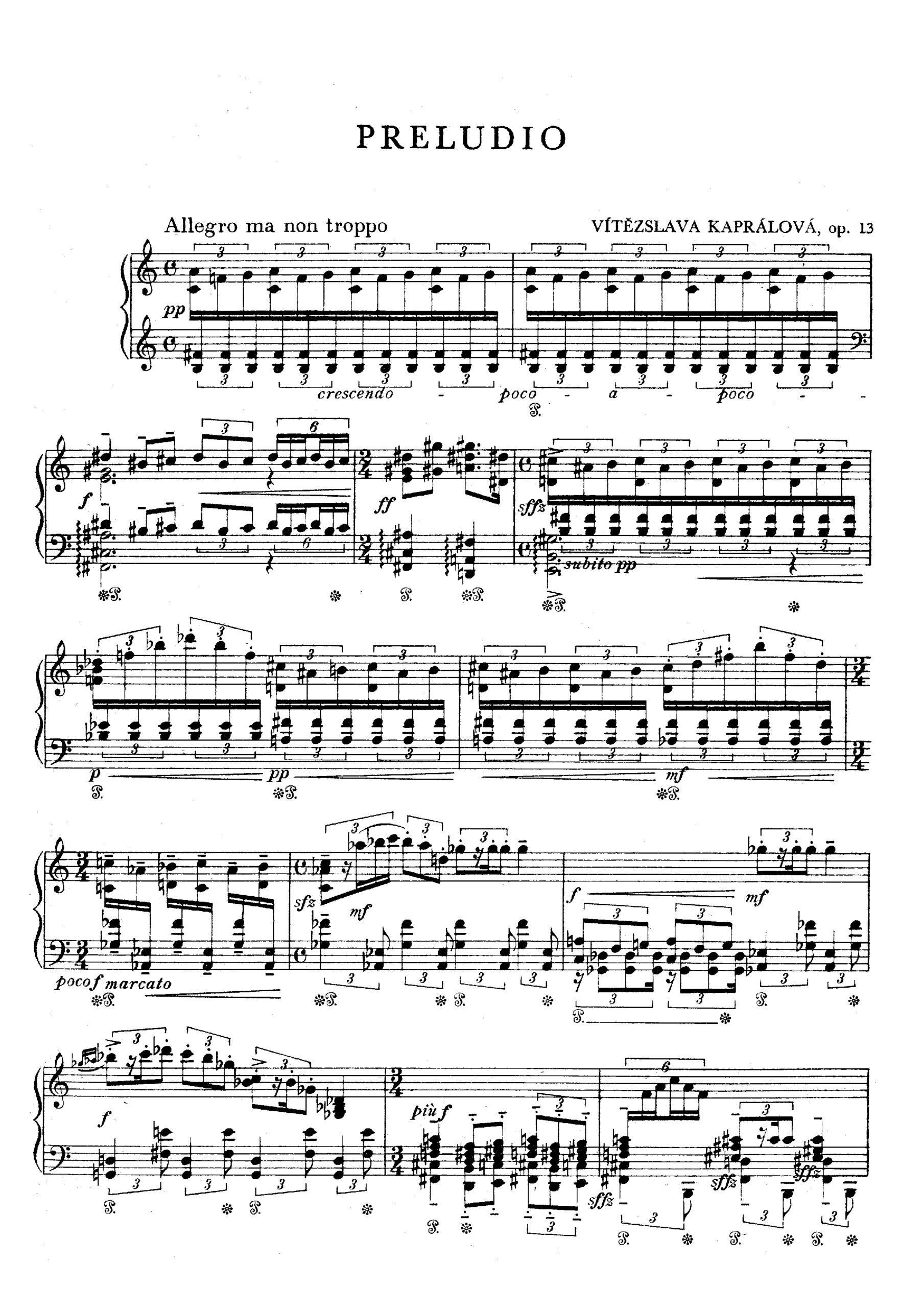
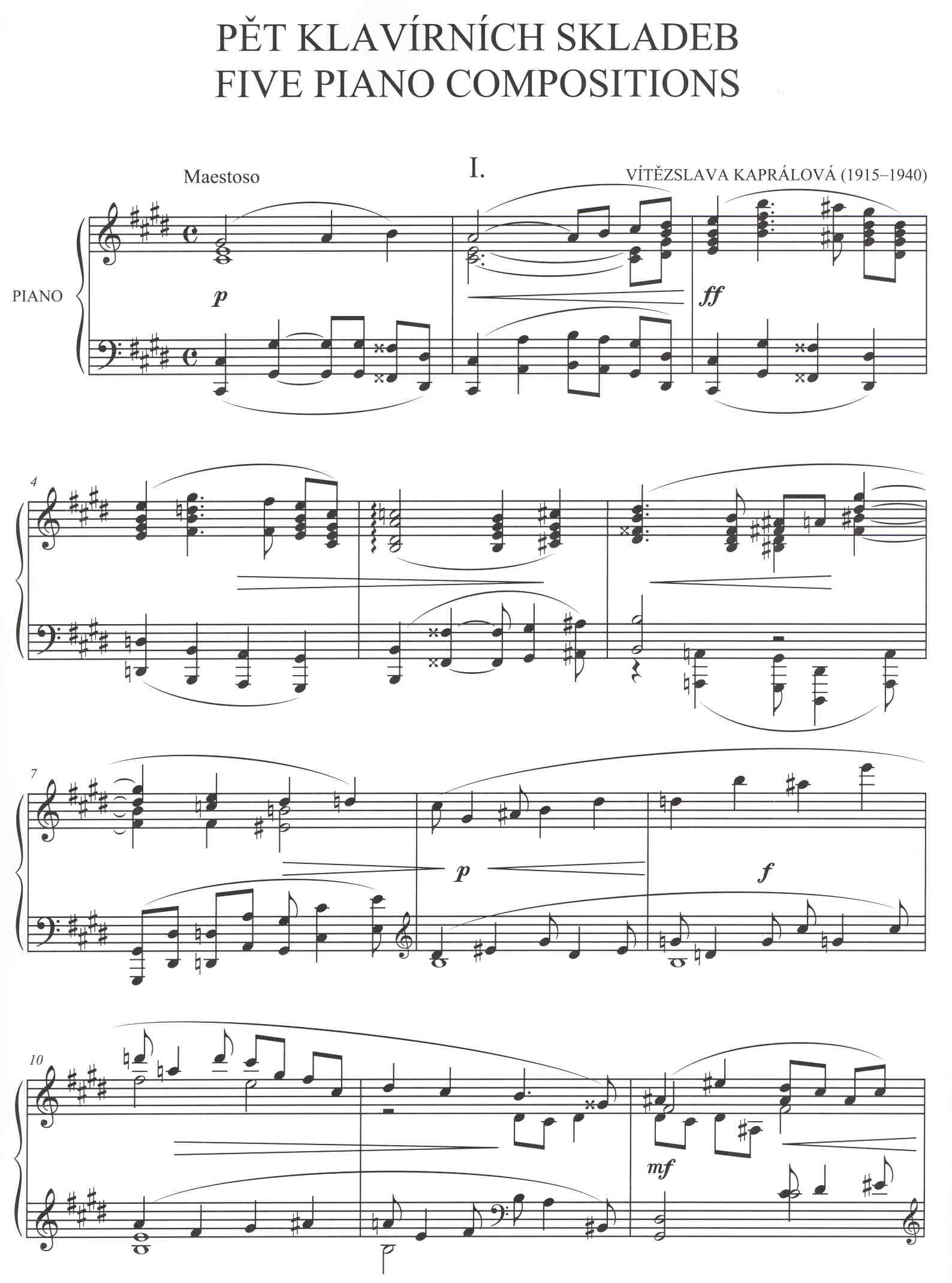
But this question is not really a question, or at least, it is one which one may spend not even a minute questioning, if one listens only to her output. Her Military Sinfonietta, her April Preludes, and her Piano Concertos are exemplars of high modernism, experimental but reserved in their execution (read: accessible).
Add to these descriptions the fact that she conducted the Czech Philharmonic, the BBC Orchestra, and was (posthumously) granted membership to the Czech Academy of Sciences and the Arts, and her resume begins to read as someone worth having a resume. Her compositional output was an upsurge in a pre-war world when composers were mapping the landscape of modernism post modernism. Stravinsky had begun to approach neo-classicism, Schoenberg had since passed the height of serialism, Copland was beginning to venture into his Americana phase. In the midst of this, Kapralova, undeterred by any of her factual constraints (it cannot be ignored that she did these things as a woman in a field largely given exclusively to men), exposed the trail that still lay beneath all that had been achieved in the late 20s and early 30s. She reminds us that trailblazers need not be revolutionaries: they must merely strip away the bracken to remind us that the trail is worth walking.

Artist of the Week
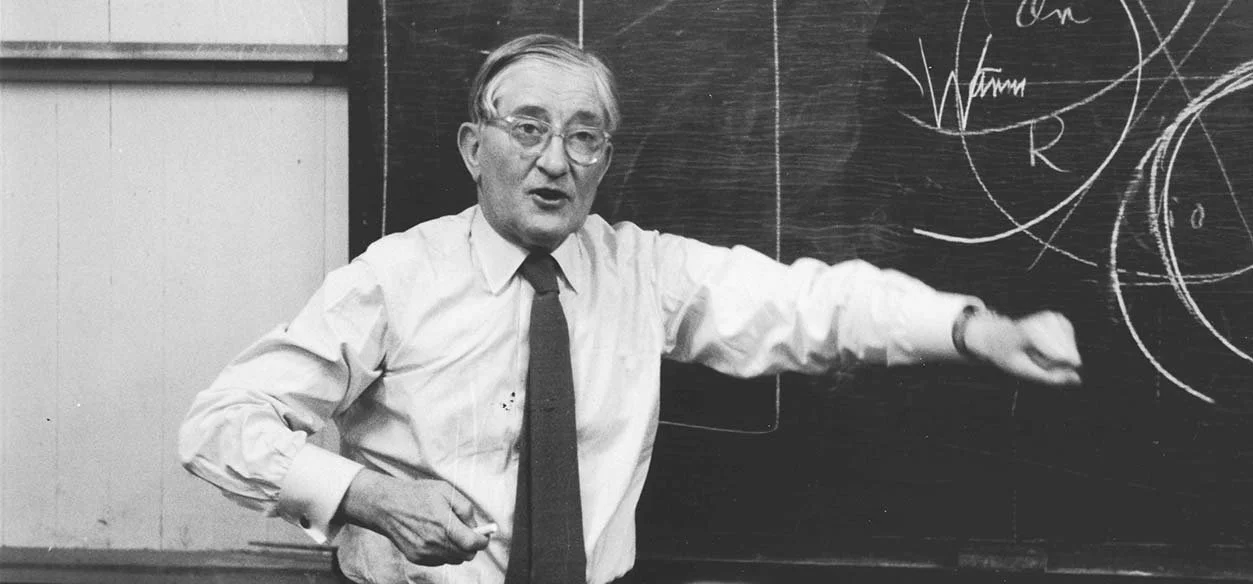
Josef Albers
Josef Albers strikes a personal chord with me because of his promotion of my favorite composer: John Cage. One of Cage's most important tenures was his professorship at Black Mountain College, a progressive and communal school for artists. This was where Cage staged his first Happening, where Cage developed some of his earliest post-modern works, and where Cage explored his nascent fascination with mushrooms--all things integral to Cage's later life. All things possible only because Albers invited Cage to teach there.
Albers, then, held an important place in my pantheon of art if only by proxy, so when I decided on him as Artist of the Week, I imagined it would be a fun and casual exploration of an artist who was directly connected to my favorite artist, perhaps with some insight into how he influenced Cage, if at all. That is to say, I believed this week would be, in the end, a study of Cage vis-a-vis Josef Albers. How happily I admit my ignorance and my mistake.
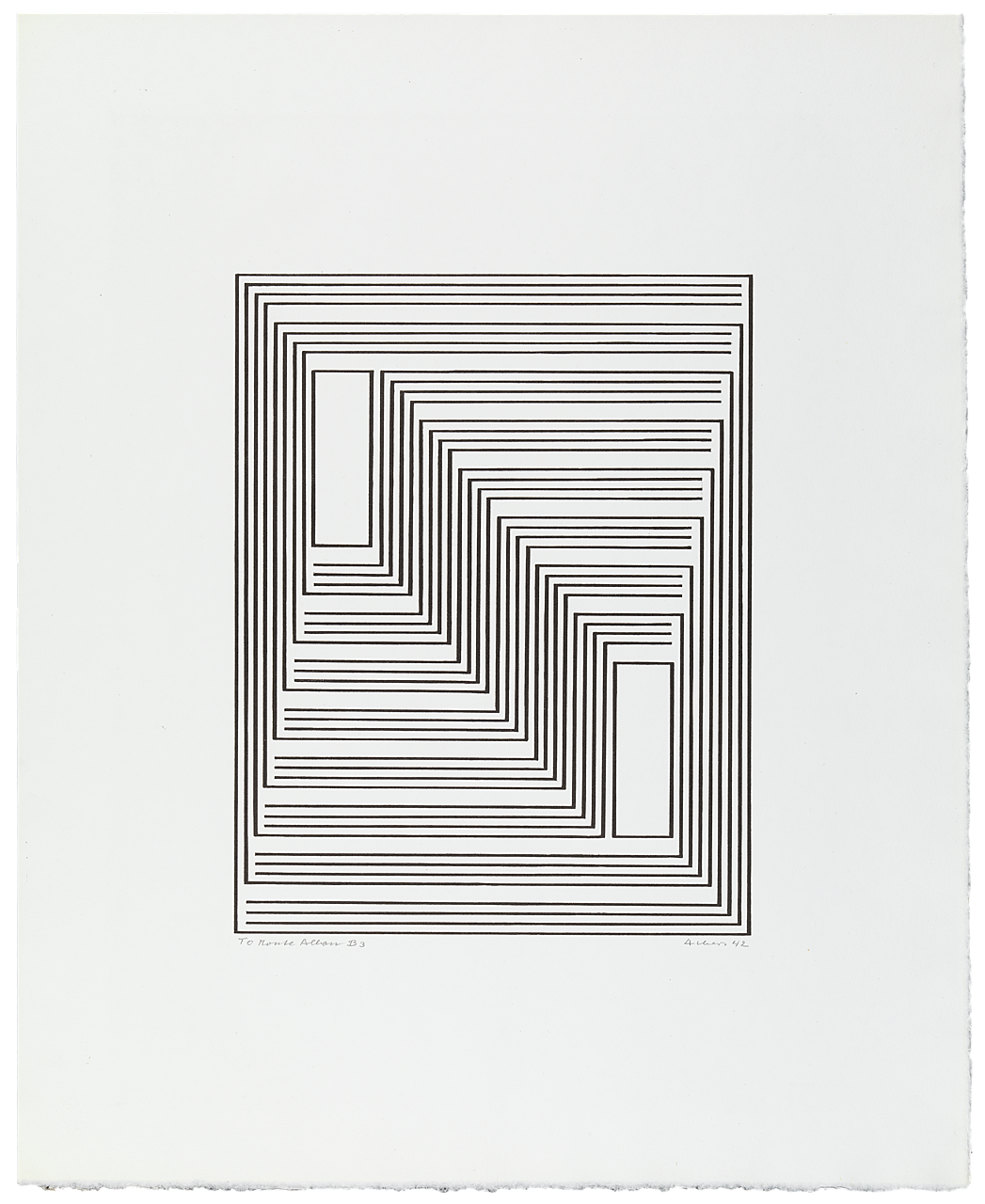
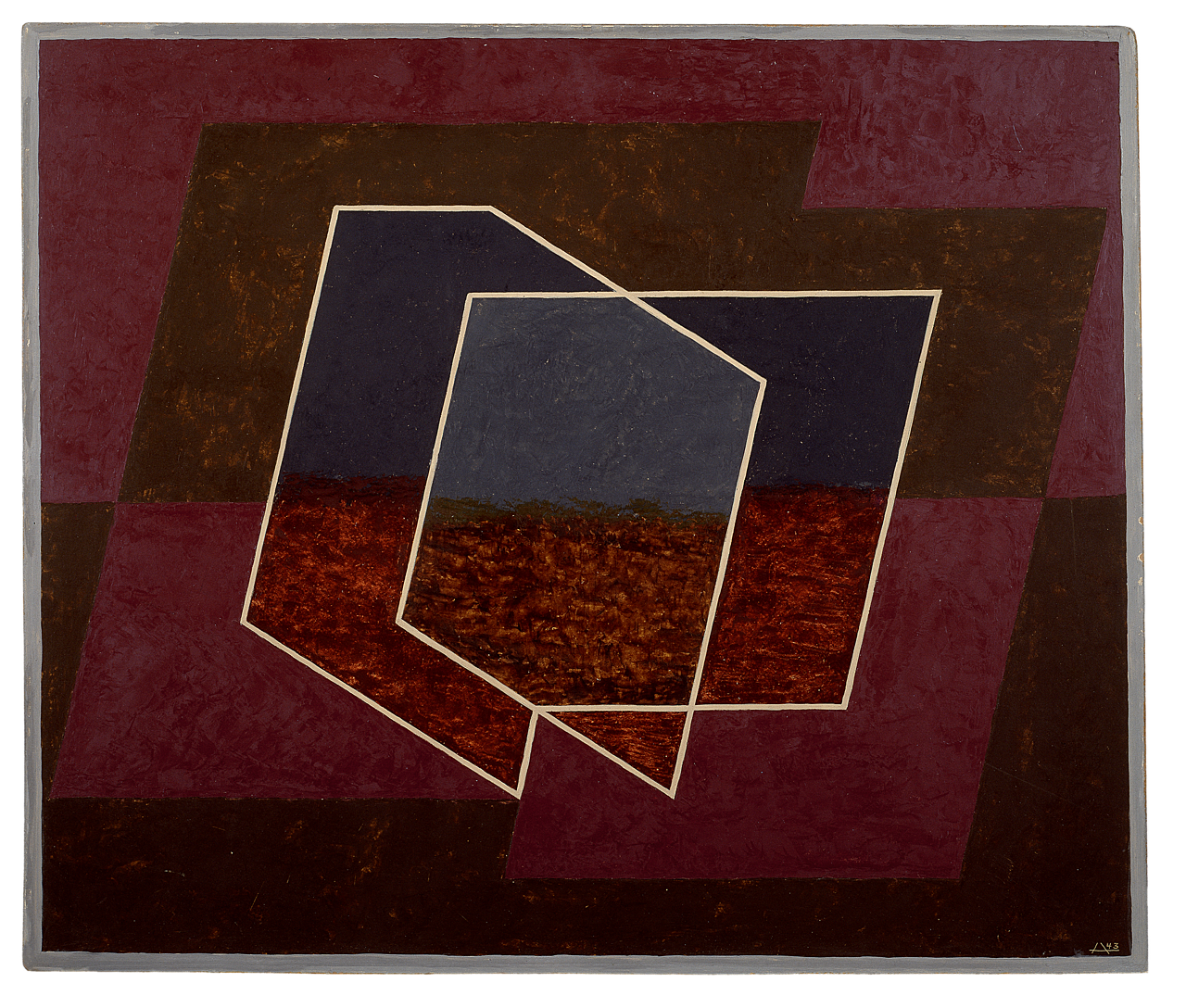
Albers, of course, is connected to Cage artistically, and the connection becomes clearer and more precise when we understand what Albers was doing with his art. But to limit his importance to a mere connection is to do a sever disservice to Albers, who was exploring his forms long before Cage. Many would summarize Albers in a single word: color. And while this is generally accurate seeing as Albers was primarily and explicitly interested in colors and their relation with each other, I think it overlooks a greater aspect of his work: seeing as opposed to observing.
Imagine walking into a gallery, filled with the art of ancient masters. We marvel at the colors, the textures, the brush strokes, the chiaroscuro, the luminosity, and how these all create a scene for us to observe. Liberty Leading the People is a beautiful representation of romanticism, combining exquisite brush work and memetic design to produce a scene exploding with emotion. The Night Watch is a paragon of shadow and light manipulation to convey a sense of drama and intrigue. Even something like The Card Players by Cezanne introduces avant-garde techniques to present a new type of observing in perspectivism: we observe the scene from multiple perspectives simultaneously. We walk through and away from the gallery as though we have entered a hall of mirrors, reflections of life and emotion cradling us with sublimity. But in this gallery, each of these paintings remains an observation: the colors, the geometry, the techniques, all synthesize to produce a story for us to observe, a scene for us to witness. We see them as paintings, yes, but we also see through them as works of art, just as we see the text on a page, but, more importantly, see through the text to the story it presents.
These need not be memetic copies, either; even in the painterly analogons of the impressionists, the symbolists, or the suprematists, the art conveys something to us, even if it is kept within the painting, as it were. The paintings become metaphors (or symbols) for some greater emotion, some greater idea, some greater experience. They remain, however, portholes to something beyond themselves.
The same was true of music pre-1951; then, in a violent upsurge, John Cage broke music down to its constituent parts: sound and silence. For me, this was the greatest revolution in music since Beethoven's ascendance from the classical tradition to the Romantic. Even in the experimentation of the modernists, music remained a passage to something else, an expression of some other emotion or feeling which found itself in music, as God finds him/her/itself through humanity.
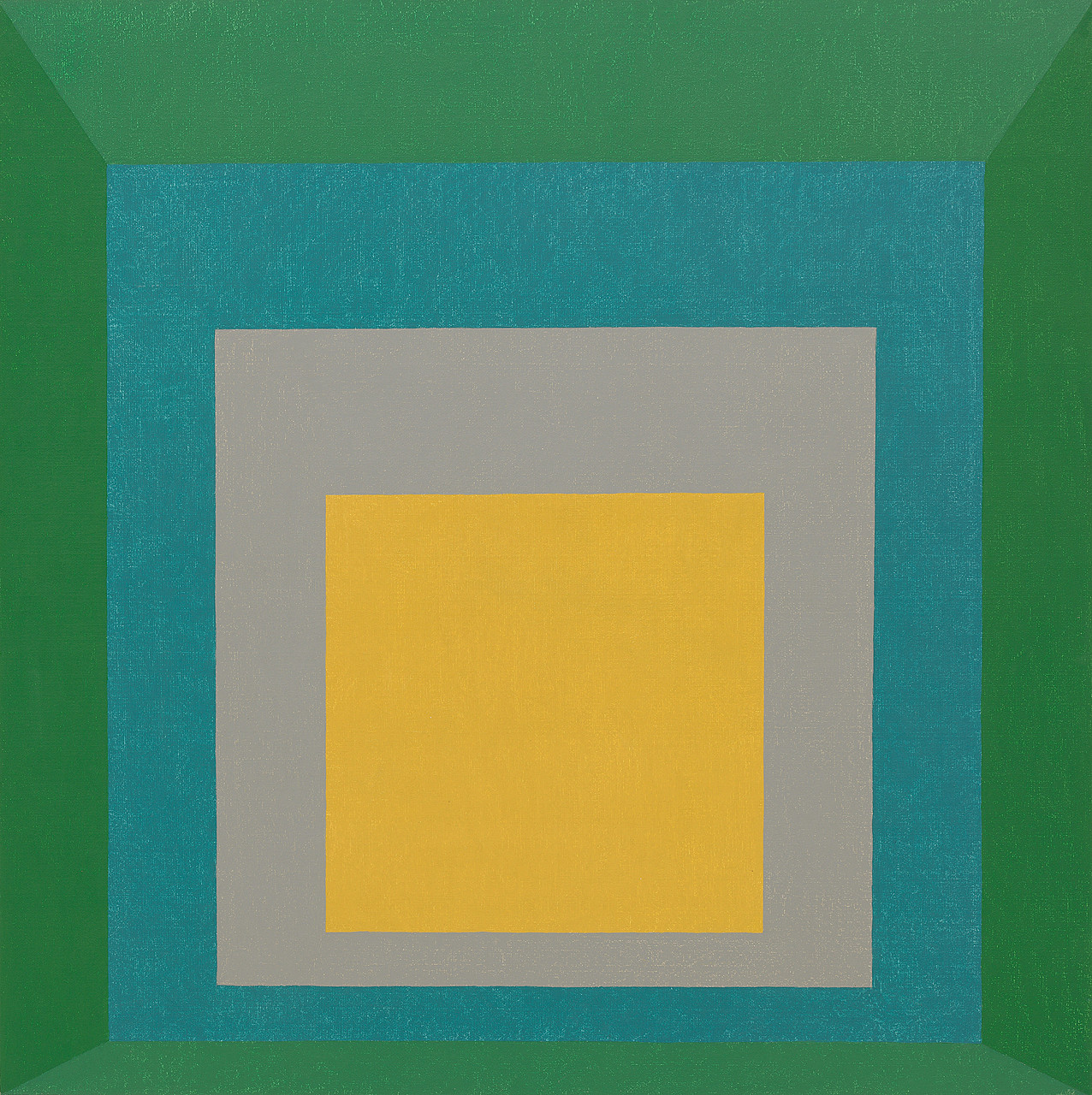
I recognize, now, that art suffered the same fate until the man I presumed to be another avant-gardeiste decided to break art down to its constituent part: color. Now I shall concede first and foremost that Albers was not the first to treat color as a primal element in art, nor the first to produce works which were, by some regard, purely art and not something-through-art. But I believe Albers' contribution is unique for the sole reason that his art was not trying to be expressive, nor trying to be reactionary. Even in the great black square of Malevich, art was still aiming toward. Albers does away even with this sentiment, and instead presents art as something aiming within. His purpose is not to direct art to some transcendent, but to direct us to the way that fundamental aspect of art interacts with itself: color. Color itself became the subject of his art, not as expression but as itself. This is, admittedly, not as transformative as Cage's reduction of music to pure sound; instead, it occupies a space closer to Schoenberg's Twelve-Tone System which attempted to extract music from its tonal resin and present it in a form which treated each tone as equal, the music therefore bearing a relation only to itself. But Schoenberg's Twelve-Tone System remains one of the most revolutionary inventions in music, and Albers Homage series is no different. Albers, perhaps unlike any other artist in history, took what may have been considered a pedagogical exercise and transformed it into a revelatory artistic experiment.
Moreover, Albers' choice to display his color through the square is paramount in his self-sufficient aim. No other shape would have allowed the colors to exist as they do. This is primarily a physical fact: any other shape would either 1) refuse itself as it reached the edge of the canvas, leaving a white space, or 2) extinguish itself into an indistinguishable mass opposed to the shapes within it. In either scenario, the color loses itself once more in form, not because it is formless, but because the difference in form forces itself into the experience of the color so that the experience is no longer singular but dual, or worse. The square is a perfect representation: the canvas, and each square within it as designed by Albers, is continuous, and the color becomes the fact to be seen. We still see the square, yes, but they are squares of color, not colors of different shapes.
It is tempting to say color took on a new life in Albers, but I think this is erroneous; color did not take on a new life--it was given its life back, rescued from the clutches of emotion, symbolism, theology, psychology, or mythology. Albers allowed us an insight hidden in traditional art, and in such an allowance, we are shaken from the epoche of our traditional perspectives and given a glimpse of the way colors exist for us when they are allowed to be on their own.
Albers remarked that a friend once asked if Albers drew his lines freehand; upon hearing that Albers used a ruler, the friend became disappointed, believing a true artist would be able to construct such shapes without assistance. I believe there is truth in this. If drawing freehand is the sign of an artist, it would be an insult to call Albers an artist. An insult not to art, but to Albers, for subjugating him to a mere technique would be to obliterate the entirety of his philosophy and that which made him so much more than an artist.
Behind the Scenes: Updates on Issue 3
The ENPRI staff is hard at work reading through all your submissions for Issue 3! We are also in the process of finalizing the cover art for Issue 3, and it is a serious departure from our first two issues (we felt it appropriate considering the theme). On the Prismatica side, the next video is currently in production, and is shaping up to be the longest video yet, as well as the most historical. The topic, which will be revealed later (I can't give away all the secrets!) is actually the very topic which spawned the idea of Prismatica--even before Otzi. If you want a hint, one of the books used in researching this video is: The Cause of All Nations by Don H. Doyle.
What Suffering Means to Us
We've received a lot of great work so far, but as we inaugurate the second half of our call for submissions, we wanted to explain some of what we are looking for in works which deal with suffering. One of the ways we are looking at suffering is through the intimate: the hyper-personal aspects of suffering. This can include your relationships with your family, friends, romantic partners, or former romantic partners, and the ways those relationships have impacted your life, and potentially caused you suffering; it might also include descriptions of the systems of suffering that are passed down to us through our families and communities; the generational traumas that are sometimes unconscious and sometimes intentional. We are also looking at the types of suffering which come from mental and physical pain and sickness that often ravage each of us during different parts of our lives.
We're also interested in suffering as a universal experience. This might be suffering that is institutional, structural, or existential. Suffering that affects nations, civilizations, and entire worlds. Or perhaps you will explore suffering as a concept itself asking what suffering means, or whose suffering gets validated and whose gets ignored, especially in a time when social media and algorithms determine whose suffering we see, and whose we do not. You might approach this from sociological, philosophical, or even economic perspectives which scrutinize suffering in ways beyond personal recollection. Of course, these are only some of the ways we have interpreted the theme of suffering; we are excited to see the myriad of ways you interpret suffering above and beyond our ideas! We want works of fiction, non-fiction, poetry, and visual art that explore suffering as a personal experience and as a global one. We hope to see your work in our inbox soon! The call for submissions is open until May 8th.