ENCYCLOPEDIA PRISMATICA VOLUME 1, ISSUE 4
To create is to resist; to remember is to rebel.
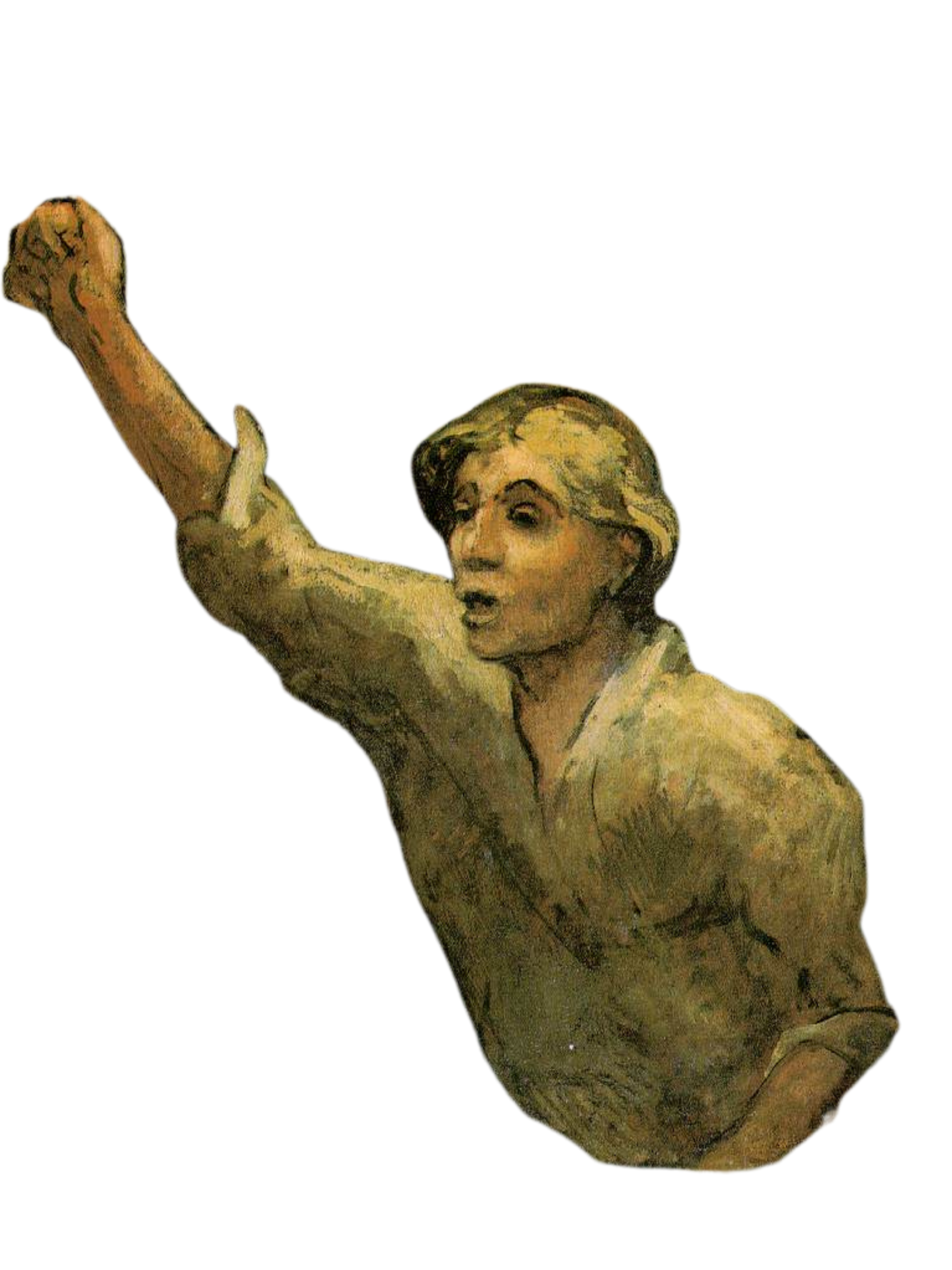
Issue 4 of Encyclopedia Prismatica takes as its first principle the inseparability of art and refusal. From Fanon to Beauvoir, from the barricades to the blank page, resistance has never been merely a political act—it is an ontological one. To make something is to assert that something ought to exist. To remember is to refuse erasure.
Purchase your copy here!
-
This is our shortest issue of Volume 1, and we are disappointed and surprised by that fact. When we originally announced this issue’s theme, we believed it would prompt an abundance of submissions equally passionate and critical. Instead, we received fewer than one hundred submissions, and though many of them were excellent, few possessed the fervor we expect-ed. This is by no fault of the artists themselves, of course; instead, we believe it evinces the status of resistance in contemporary discourse—especially political discourse.
To resist is to make oneself an enemy. To be an enemy today is to be lowered to a stratum beyond even the subhuman, by both those whom you oppose and those whom you would presume are your allies. Resist one injustice and you are accused of ignoring a hundred others; rebel against a single atrocity and you are assumed to support a thousand more. The fatigue of resistance is a real and unfortunate symptom of a society attuned to immediacy and presence.
But what is the solution? Resignation? Apathy? Nihilism? These seem poor excuses for inactivity, as do the realities of judgment and ostracization. Resistance does not succeed be-cause it resists everything all at once; it succeeds because it commits itself fully to that which it resists, knowing that one must resist something or else risk the total annihilation of one’s freedom. Rebellion, despite its limitations, cannot defeat itself because of its limits; it must, instead, define itself within those limits as that which exposes and, as much as is possible, destroys those limits.
We could, were we privileged enough to do so, argue over which rebellion is most important and who is and who isn’t rebelling; but to do so would be to choose not to rebel. We could, were we inclined, choose to discuss revolution and its merits and who is and who isn’t a real revolutionary; but to do so would be to choose not to revolt. Instead, we take the harder stance: to live, as Camus said, as if our very lives were acts of rebellion. We cannot be a rebel for every cause, nor a revolutionary in every revolution. But if we choose, in spite of this, to live as the rebel lives, to die as the revolutionary dies, it shall not matter, for the spirit of revolution will remain. A revolutionary here will inspire a revolutionary there; a rebel now will inspire a rebel then; a choice today will inspire a choice tomorrow.
This collection of resistance and rebellion is short, yes—but it does what resistance must do: it resists, purely, simply, passionately, without compromise. It does not need to be a monument; few revolutionaries are. It does not need to be immense; subtle rebellions are often the most courageous. In the end, we hope only that it inspires others to speak up, to speak out, and to commit to their own little rebellions, wherever, whenever, and however they are.
This issue recognizes the plights afflicting nations and peoples across the world; it also recognizes that voices can only echo so far and for so long. But those voices, when voiced loud and long enough, can move mountains, if only we listen to them. So let us listen to the rebels and the resistors, the revolutionaries and the dissidents. Not because they go against the grain, but because their voices are the ones which demand we commit to the world. If re-sistance today is difficult, if it is overwhelming, if it seems impossible, let us resist anyway, not because it will be worth it, or because the ending is clear, but because doing so is the only sign we have that our choices mean something.
Priest Gooding
—————————————
We live in a terrible time of political strife and suffering. Governments murdering their own citizens, politicians prioritizing money and power over welfare and community, wars waged for vague reasons and hostility toward those who speak out. There are some who are rising against this tide of hatred; politicians in New York and Texas, in Vermont and Michigan, who seem to be standing up to demagogues and iconoclasts. But that is not enough. We must join in the fight against oppression; we must resist the actions of a government which cares more about ideology than humanity; and we must rebel against the systems that are destroying lives rather than saving them. We hope the works in this issue inspire you to join the struggle against injustice, if even only by creating art that cannot be kept hidden any longer.
Taven Strickert
—————————————
“He tasks me; he heaps me; I see in him outrageous strength, with an inscrutable malice sinewing it. That inscrutable thing is chiefly what I hate; and be the white whale agent, or be the white whale principal, I will wreak that hate upon him. Talk not to me of blasphemy, man; I’d strike the sun if it insulted me. For could the sun do that, then I could do the others; since there is ever a sort of fair play herein, jealousy presiding over all creations. But not my master, man, is even that fair play. Who’s over me?”
These words uttered by Melville’s Captain Ahab constitute, in my estimation, one of the keenest expressions of rebellion in all Western literature. It should come as little surprise that they were written by an American. The ideals of individual freedom and defiance of authority are core to the American identity. Here, we see this in its highest form—the act of resistance and the assertion of one’s very own existence become an almost singular expression.
Whatever shapes particular instances of rebellion take, whether in pursuit of political ideals, in opposition to cultural institutions, or even in defiance of one’s poor parents, who are often the first and therefore most easily targeted figures of authority, these are all ultimately minutiae beside the pure act itself and all its existential significance. You will find many such shapes in the pages of this issue. Beyond the individual stories they tell in isolation, I hope that, taken together, they express a bit of that American spirit that exists inside all of us.
Alex Van Huynh
———
-
jamilah malika abu-bakare
A. Jay Adler
Mitchell Biggs
Deborah Blenkhorn
Soham Deshmukh
Dominic Dimapilis
Jack Cariad Leon
Kade Lukiyo
a bee roach
a bee roach
J.J. Steinfeld
Craig Stockwell
-
Physical
Digital
-
Published by ENCYCLOPEDIA PRISMATICA
Printed with INGRAM
Designed and Printed in the USA