Encyclopedia Prismatica Volume 1, Issue 3 explores suffering in its universal and intimate forms. Through essays, stories, poetry, and art, the creators in this issue interrogate generational trauma, physical pain, societal struggle, and cultural conflict. This is not suffering as metaphor, but as the lived texture of human life.
Get your physical and digital copies today by clicking the “Shop” button at the top of the site.
Access your free digital copy here.
Read the essay “The Wound That Speaks” by Taven Strickert here.
ISSUe no. 3 | June 2026

-
Camus misspoke when he insisted one must imagine Sisyphus happy. The most famous sentence in modern philosophy is based on a misled optimism: that each of us can be a Sisyphus, answering absurdity with a scoff and lifting our hearts in the struggle against it. We reject this and the burden it places on the sufferer. We are no kings and cannot cheat death. We cannot struggle against eternity with ceaseless strength. We have no consolation from the knowledge of our fate, nor endurance to break ourselves ceaselessly against our exhaustion until we once again find our spirits. Perhaps Sisyphus is beyond exhaustion; perhaps eternity precisely grants him boundless energy because he has no reason to withhold. Shall we compare him to the single father struggling against a Kafkaesque system? Shall we stare pityingly at the single mother and tell her that all will be made aright if only she continues fighting? Shall we renounce our responsibility by lauding the sufferer as a hero of the absurd?
Each of us is nonetheless tempted to imagine every suffering as worth suffering, and every person capable of taking on the role of Sisyphus indefinitely. Some are wont to cast a pitiful glance upon the sufferers because one must imagine their suffering means something, that they can and should transform their suffering. Each of us becomes a myth to the other, and our sufferings become demands upon us to mythologize ourselves. It is up to us to struggle against the absurdity of that which never comes.
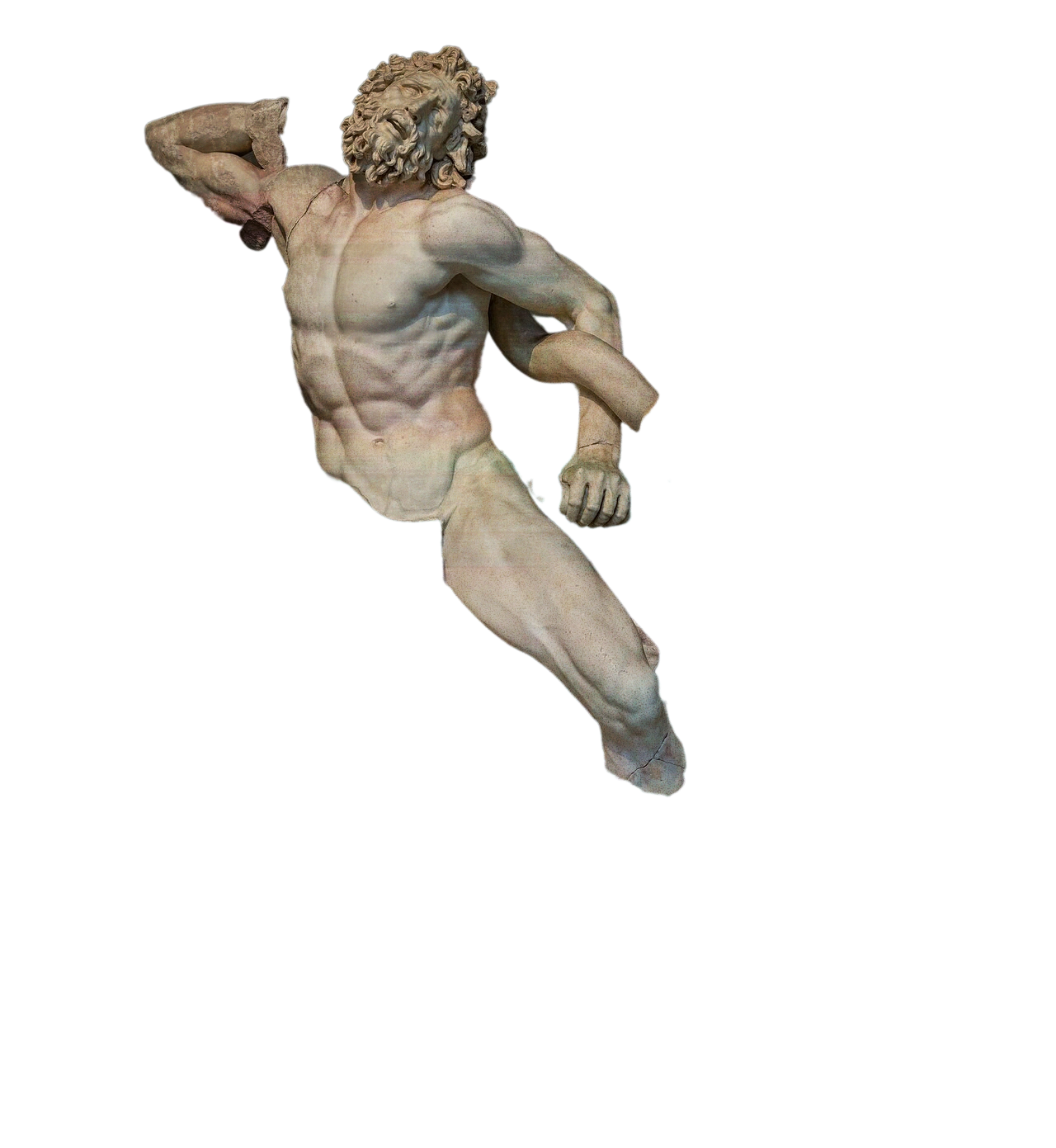
But we are determined to wrest responsibility from those whom we have turned into martyrs to suffering. Doing so places responsibility where it belongs: with those of us capable of witnessing the sufferer not as object for pity but as subject to be encountered wholly, fully, in the flesh. We thusly have committed this issue to a new view of suffering: Promethean suffering. As Prometheus was chained to his rock only to suffer, with no struggle or effort imaginable, so are the figures here chained to suffering, full stop. These are pieces which do not justify, which do not comfort or encourage, which do not help or inspire. You shall find no positivity within these pages, nor Panglossian declarations of a better future. Many of these pieces are interrogative, visceral, and unapologetic. None, however, are pieces of nihilism or stoicism. There is no doom here, even in the greatest tragedies. Our task is not to lament or to fasten; it is only to see each sufferer merely as sufferer, and each suffering merely as suffering. We might then encounter each other as real, and no longer as myths set aside as platitudes for when the going gets tough. This issue spares none, and, indeed, may itself require a Sisyphean task: to stare at the terrible and the terrific without asking anything of it.
We are determined to continue staring.
Priest Gooding
—————————————
We chose “Suffering: The Intimate and the Universal” as the theme for this issue because we wanted to sit with something real—not suffering as metaphor, not as backdrop, but as the actual texture of lives being lived. What came back surprised us. Writers and artists sent work about bodies, about grief, about isolation, about the slow accumulation of harm that never announces itself as harm. They wrote about cultural inheritance and bodily ritual, about the systems that produce pain and the people who absorb it without being asked. They wrote about love that destroys and love that outlasts death. Some of the most powerful pieces here refuse any resolution at all. They end where they end because that is where the experience ends, which is often nowhere, which is often just another day. We are grateful to contributors who trusted us with work this close to the bone. We hope you feel, reading it, that you are not as alone in what you carry as you thought you were.
Taven Strickert
—————————————
We initially thought that the editorial process for this issue would be straightforward—a collection of pieces that explored the depth and breadth of suffering. However, we quickly realized that this topic was deeper and broader than we originally anticipated. Indeed, every submitted piece was on theme in its own unique way. In hindsight, I believe now that it would be more difficult for an artist not to deal with suffering.
Perhaps this should have been obvious to us. Suffering is one of, if not the, universal truths. This has been appreciated through all human history. The very first of the Four Noble Truths is dukkha—all is suffering. The Passion of Christ, from the Latin passio—suffering or enduring. The cycle of samsara, the Book of Job, the philosophical problem of suffering—if I may adapt Alexander Pope for a moment, to suffer is human.
What might you take from this issue? Practically speaking, of all possible experience, suffering is often thought to be the most formative—that all growth must come through it. We know this objectively—psychology and neuroscience tell us that fear learning is one of the most powerful mechanisms of the human brain. We know this implicitly—empathy, connection through shared suffering, is one of the most craved human experiences. And we know this artistically—suffering of all sorts suffuses our monomyth and its derivatives.
Although you are about to enjoy a superb collection of essays, stories, poetry, and art, know that they were chosen from an equally as eclectic pool of submissions we did not have room to include. I hope that those we did select can help you reflect on your own personal slice of suffering. I hope that this issue can help you learn, find a shared empathy with your fellow humans, and perhaps even inspire the expression of your own story in the future.
Alex Van Huynh
———
-
Diamond Adeyinka
Daniel Andrade Amaral
Nicholas Alti
AB
Ares Bartell
Evangeline Beeching
Dio
Johnathan Duff
Kurt Grunsky
J.I. Kleinberg
Stephanie Jones
Kaleigh Macchio
Lucia Morello
Aryasatya Rafa Prayitno
Doren Robbins
James Reidel
Vaani Sai
Isabella Sandston
John Schloss
J.J. Steinfeld
Taven Strickert
Daniel Thompson
-
Physical
Digital
-
Published by ENCYCLOPEDIA PRISMATICA
Printed with INGRAM
Designed and Printed in the USA